Raspberry Pi Pico Powered PicoIDE Destroys Crowdfunding Goal — Easily Emulate Old IDE / ATAPI Disk Drives Using Micro SD
The crowdfunding campaign for PicoIDE, an "open source IDE/ATAPI drive emulator for vintage computers" is live and at the time of writing it is 225% funded, raising nearly $80,000, well over its $35,000 target!
Created by the Ian Scott, who also created PicoGUS (an emulated Gravis UltraSound / Sound Blaster 2, AdLib sound card) the two devices share something in common, and the "Pico" should give the game away. At the heart of the projects is the Raspberry Pi Pico. In the case of PicoIDE it is the RP2350 used in the Raspberry Pi Pico 2 and Pico 2W.
PicoIDE has been created to address the biggest issue with aging retro computing hardware. They break!
The IDE / ATAPI hard drives and CD ROM drives of the 1980s and 1990s are prone to issues, and some just die as soon as power is applied. Old CD ROM drives commonly die as the laser diode gives out. Hard drives may spin, but errors may soon appear. So clone those drives ASAP!
So how do we preserve and use old PC hardware? We can use SD card / Compact Flash card adapters to create hard drives. We can use Gotek drives to emulate floppy and CD ROM drives. I've used both and they both work well, but with PicoIDE we get it all in one package, and best of all it comes in an injection molded 3.5 inch case that would look great in an old PC case. The on board Raspberry Pi RP2350 System on Chip (SoC) proves that the RP2350 and the older RP2040 SoC are still extremely versatile to the maker and retro computing communities.
There are two versions of PicoIDE:
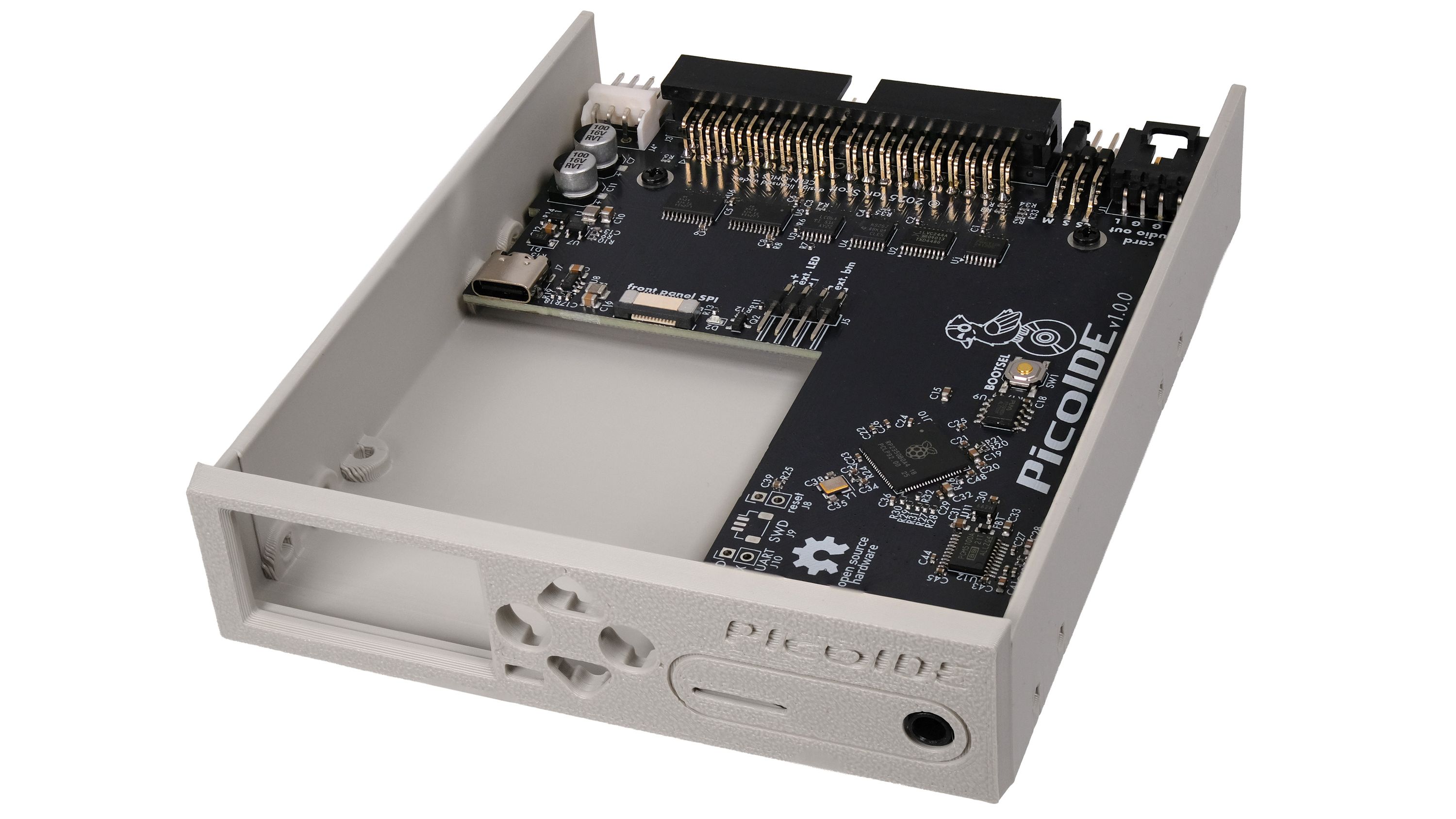
Image Credit: Polpotronics / Ian Scott
PicoIDE Base $69: Full IDE/ATAPI emulation in an injection molded 3.5-inch enclosure with microSD storage, CD audio output, and configuration via host utility or config file.
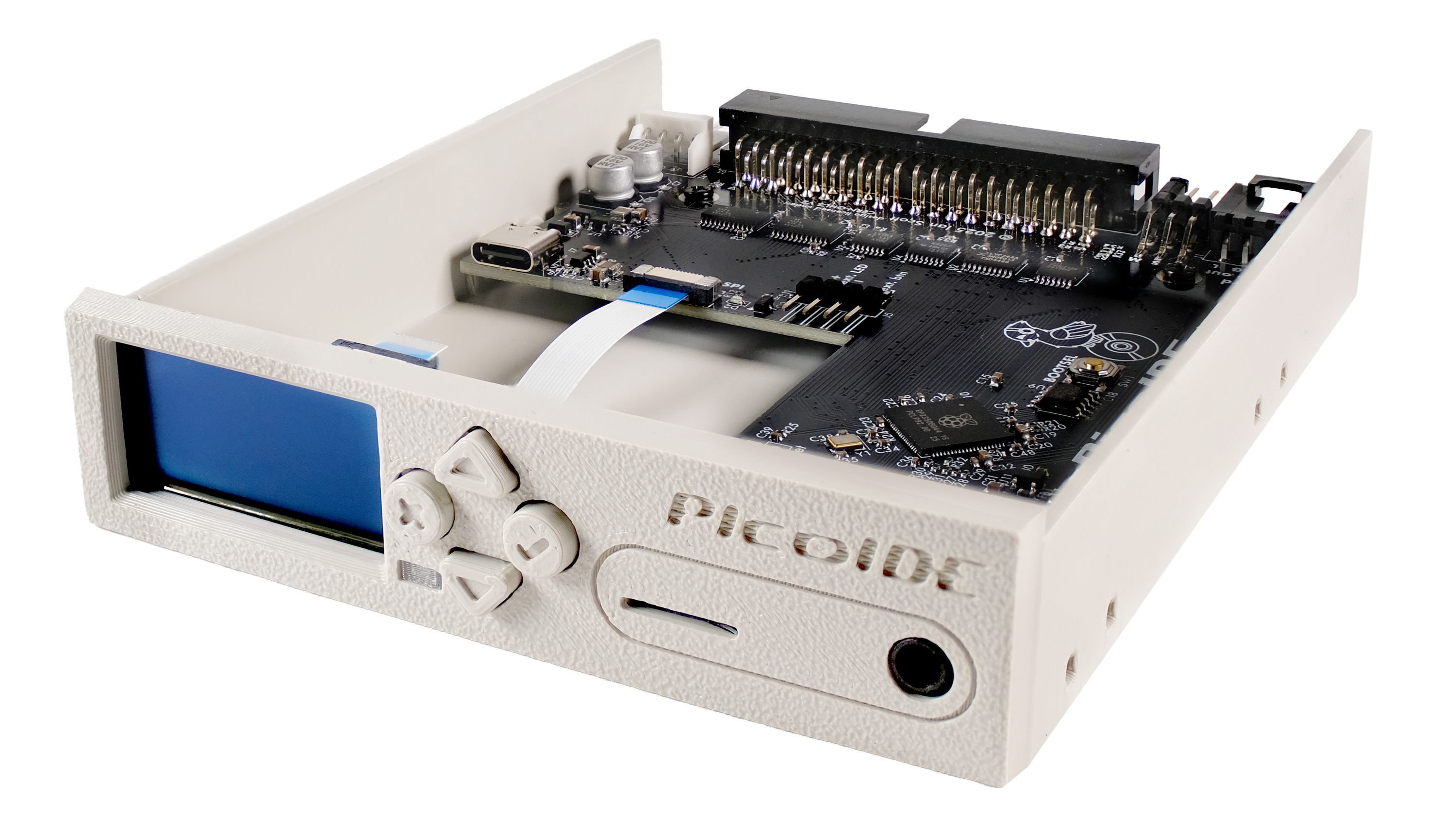
PicoIDE Deluxe (Beige or Black) $110: Everything in Base, plus a front panel with OLED display, navigation buttons, and ESP32-powered Wi-Fi for wireless image management.
Looking at the front of the Deluxe versions case, we can see a bright OLED display, and next to it are the controls to select our disk image. Just to the right is a micro SD card slot that enables us to insert cards with disk images. This is much easier than some SD and Compact Flash card solutions that require us to either open the case or reach around the back of the PC to access the card. A 3.5mm headphone jack provides an audio output.
PicoIDE supports disk images in
- Hard disk
- .img, .hda, .vhd
- CD ROM
- .bin/.cue, .iso
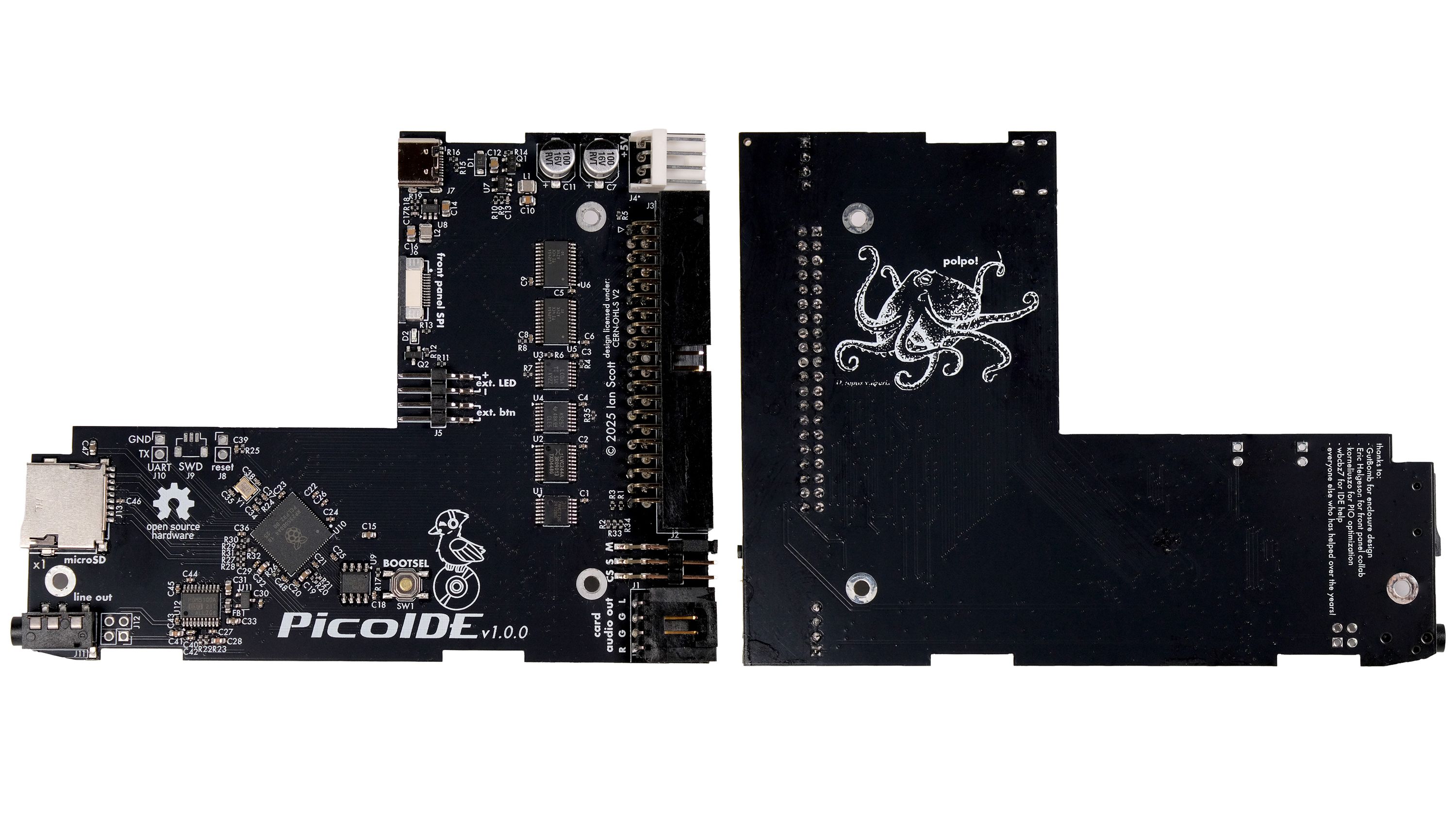
Image Credit: Polpotronics / Ian Scott
The Deluxe version also comes with an on board ESP32-C3 that enables remote management of disk images via a web interface. There is also a QWIIC (Maker Port, StemmaQT) I2C interface for use with compatible components such as sensors or additional screens.
PicoIDE is an open source project
According to the crowdsupply page, the project is open source and released using licences to "protect your freedom to use, modify and build upon the project." The hardware, covering the PCB and the enclosure, is released under a CERN-OHL-S-v2 licence. Firmware for the RP2350 us under the GPLv2. Comprehensive documentation covers both consumers and developers who want to use or improve PicoIDE. There is also a Github repository where you can learn more.
Crowdfunding
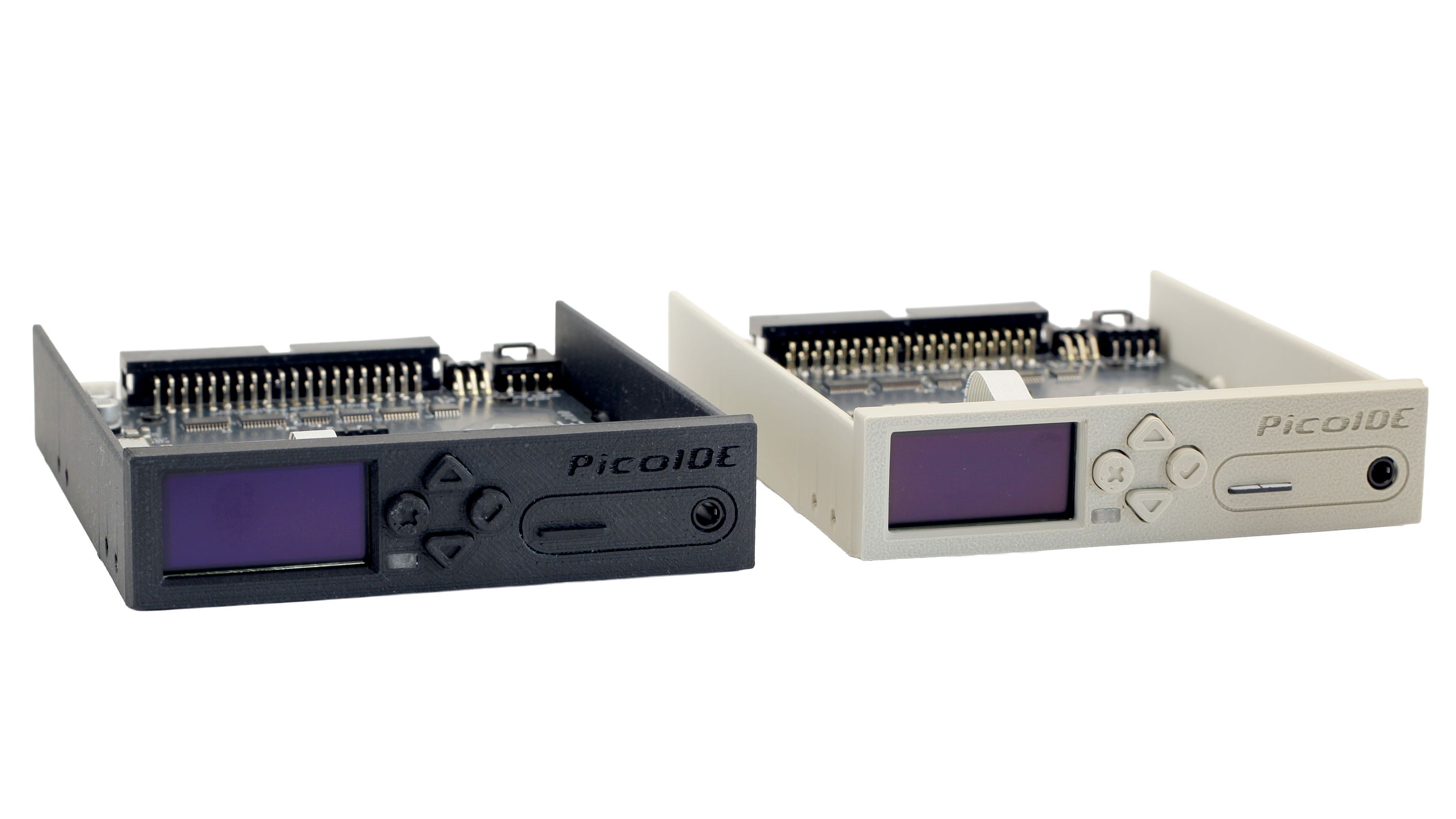
Image Credit: Polpotronics / Ian Scott
As this is a crowdfunded project, I have to give a general warning. Supporting a crowdfunded project is not purchasing a retail product. You are backing a project because you want it to succeed. There may be delays and logistics issues so only support the project if you are willing to take the risk!
PicoIDE ships from the United States, so remember to take any taxes, fees, duties etc into consideration.
PicoIDE starts from $69 over on CrowdSupply.
Main Image Credit: Polpotronics / Ian Scott